
 Save
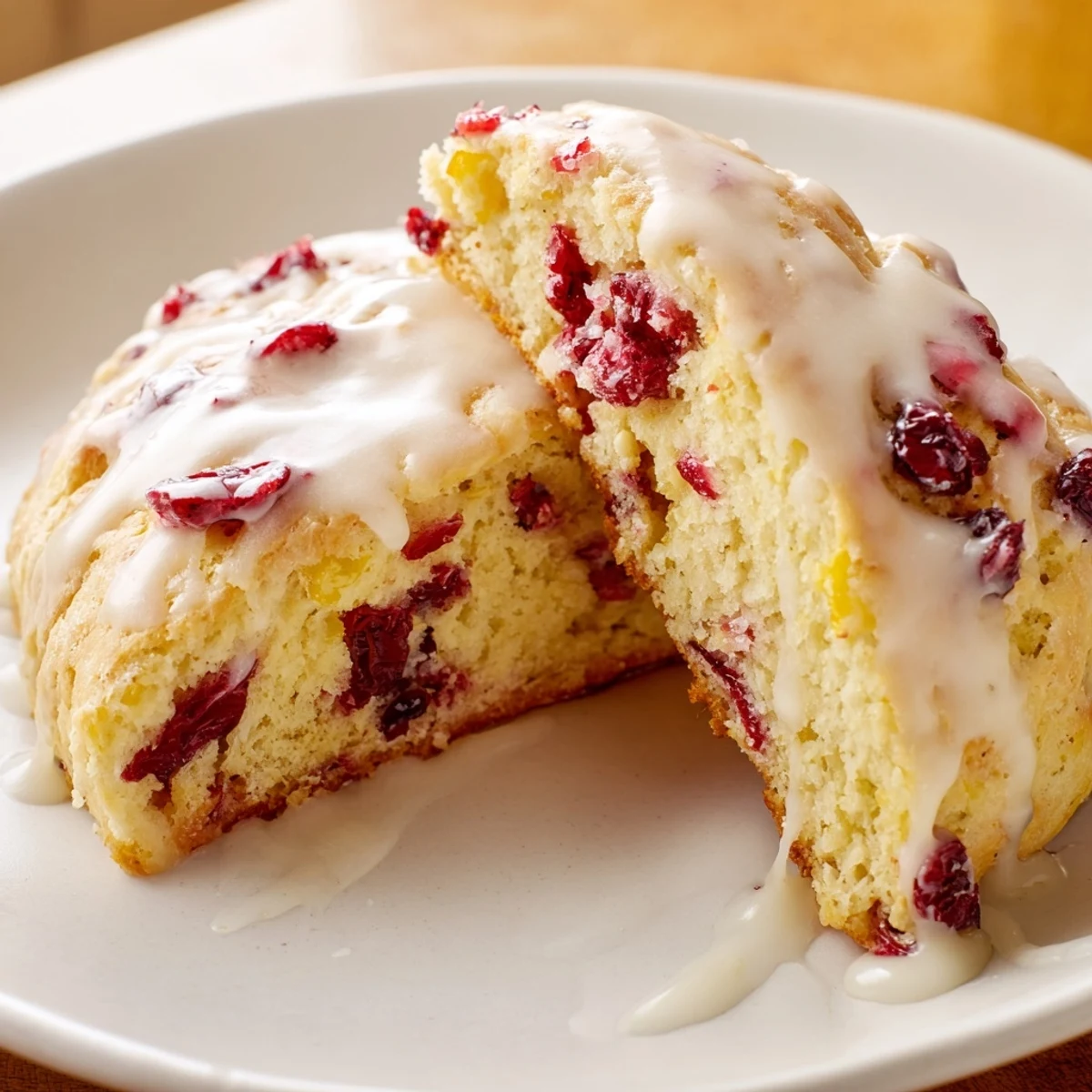
Save These tender scones blend tart cranberries with bright orange zest for a flavorful bite. The buttery dough is enriched with cream and vanilla, then baked until golden. A smooth orange glaze adds a sweet citrus finish that complements the fruit perfectly. Ideal for breakfast or afternoon tea, these scones offer a delightful balance of flavors and textures. Simple steps and minimal ingredients make this a quick treat to prepare and enjoy.
There's something about the smell of orange zest hitting hot butter that stops me mid-morning and pulls me straight to the kitchen. Years ago, I found myself standing at a farmer's market with a bag of cranberries in one hand and a bunch of fragrant oranges in the other, and I thought, why not put them together? That first batch of scones came out of my oven looking almost accidentally beautiful—golden, tender, and bursting with tart little pockets of flavor. Now they're the reason people actually show up on time to my weekend brunches.
I made these for my neighbor last spring when she was recovering from surgery, and I remember her eyes lighting up when she bit into one still warm from cooling. She asked for the recipe that same afternoon, and later told me her daughter started making them for school fundraisers. It's funny how a scone can become someone's comfort food without you even planning for it to happen.
Ingredients
- All-purpose flour: The foundation—use the 2 cups and don't sift unless you love extra work for no real payoff.
- Granulated sugar: Just enough sweetness to balance the tartness of the cranberries without overwhelming the orange.
- Baking powder and baking soda: These two work together to give you that perfect tender crumb and a gentle lift.
- Salt: A humble 1/2 teaspoon that makes every other flavor stand out like it's been turned up slightly.
- Cold unsalted butter, cubed: This is the star player—keep it cold so it creates those little pockets of steam that make scones rise and stay tender.
- Heavy cream: Richer than milk, which is why the final texture feels almost luxurious without being heavy.
- Egg: Binds everything and gives you that beautiful golden-brown exterior.
- Orange zest: Bright, aromatic, and the reason people will lean in and ask what makes these taste so alive.
- Pure vanilla extract: A gentle whisper of vanilla that softens and rounds out all the citrus notes.
- Fresh or frozen cranberries: Frozen works just as well as fresh and you don't have to worry about thawing—their tartness is what makes these scones interesting.
- Powdered sugar and fresh orange juice for the glaze: Thin enough to drizzle but flavorful enough to feel intentional, not like an afterthought.
Instructions
- Get your oven ready and prep your workspace:
- Heat your oven to 400°F and line a baking sheet with parchment paper. You're setting yourself up for success here—a hot oven means a good rise, and parchment means you won't spend 15 minutes scraping.
- Build your dry foundation:
- In a large bowl, whisk together flour, sugar, baking powder, baking soda, and salt. This mixing aerates the flour slightly and distributes the leavening agents evenly so every scone rises the same way.
- Work in the cold butter:
- Add your cubed cold butter and use a pastry cutter, fork, or your fingertips to break it into the flour until everything looks like coarse breadcrumbs. This is crucial—those little butter pieces create steam pockets that make scones tender instead of dense.
- Combine your wet elements:
- In another bowl, whisk together heavy cream, egg, orange zest, and vanilla. The zest releases its oils into the cream, infusing everything with bright citrus flavor.
- Bring it together gently:
- Pour the wet mixture into the dry ingredients and mix with a light hand until the dough is almost combined—there should still be a few streaks of flour visible. Overmixing develops gluten and turns your scones tough, which is the opposite of what you want.
- Add the cranberries with care:
- Fold in the halved cranberries (if they're large) just until the dough comes together in a shaggy mass. This final fold should take maybe 10 seconds of gentle stirring.
- Shape your scones:
- Lightly flour your work surface and turn the dough out onto it, then pat it into an 8-inch circle about 3/4 inch thick. The dough will be a bit sticky—that's how you know it'll be tender.
- Cut into wedges:
- Using a sharp knife, cut the circle into 8 pie-shaped wedges and transfer each one to your prepared baking sheet, leaving a little space between them so the heat can circulate.
- Add the finishing touch:
- Brush the tops of each scone with a little extra heavy cream. This isn't just for show—it helps them brown evenly and gives you that professional-looking golden finish.
- Bake until golden:
- Slide them into your hot oven for 16 to 18 minutes until the tops are deep golden brown. You'll know they're done when the edges feel set but the centers still have a tiny bit of give.
- Cool them properly:
- Transfer the scones to a wire rack and let them cool for at least 10 minutes before glazing. This gives them a chance to set so the glaze won't slide right off.
- Make and apply the glaze:
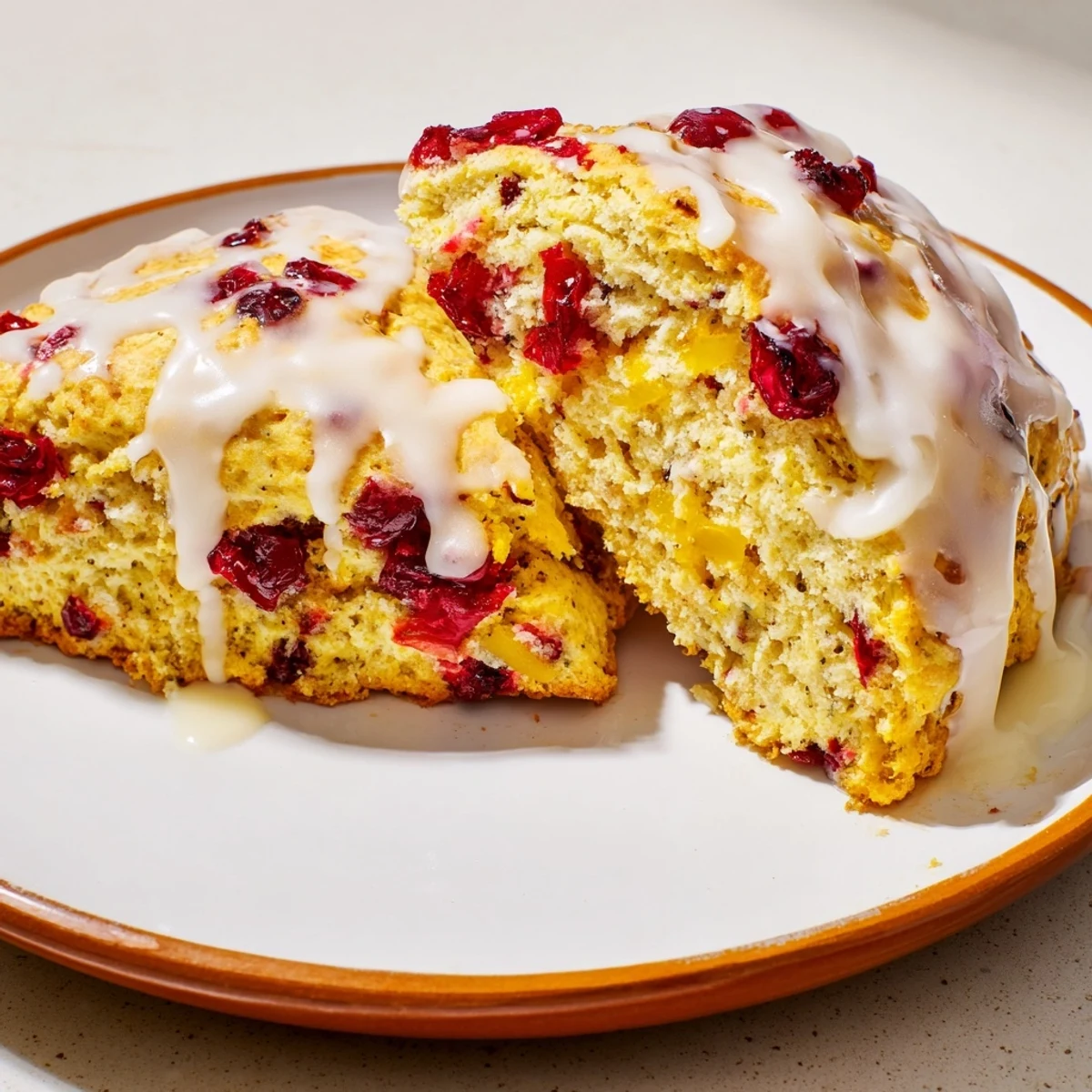
- Whisk together powdered sugar, fresh orange juice, and zest until you have something pourable but not watery. Drizzle it over the cooled scones in whatever pattern feels right to you.
 Save
Save I'll never forget the moment my eight-year-old nephew tried his first scone and announced, very seriously, that it tasted like breakfast should taste. It was maybe the best compliment I've ever received about anything I've made.
The Orange and Cranberry Pairing
The reason this combination works so beautifully is pure chemistry—the tartness of cranberries and the brightness of orange are like two notes in a chord that just belong together. The butter acts as a bridge between them, softening the edges of each flavor while keeping both intact. Once you understand this balance, you'll find yourself adding this pairing to other things: salads, glazes, even cocktails.
Scones for Different Occasions
These scones are perfect for a quiet Tuesday morning with coffee, but they're equally at home on a fancy afternoon tea spread or brought to a friend's house as a gift. The beauty is that they feel special enough for any occasion but easy enough that you're not stressed about making them. You could make a double batch on Sunday and have them ready for unexpected visitors all week.
Storage and Make-Ahead Strategy
These scones freeze beautifully for up to three months if you store them in an airtight container, and you can pop them gently into a 300°F oven for a few minutes to warm them back up. The dough itself can be made a day ahead and refrigerated, then baked fresh whenever you want them. This flexibility means you can always have fresh scones without the morning stress.
- Cool scones completely before freezing to prevent condensation and sogginess.
- If you make the dough ahead, keep it covered in the fridge and bake it straight from cold without thawing.
- The glaze is always best drizzled on just before serving, so hold off on that until the last moment.
 Save
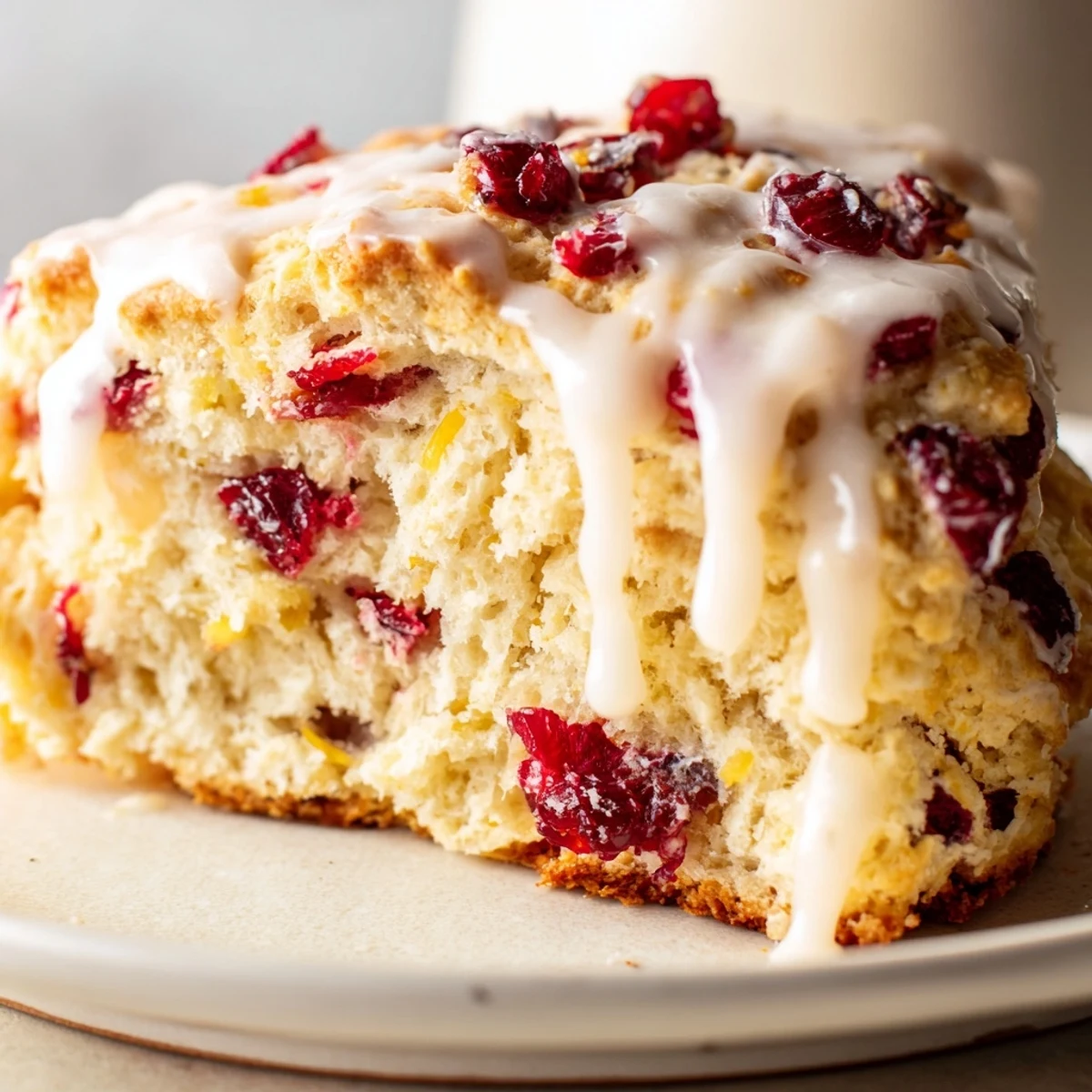
Save These scones have a way of becoming a regular thing once you've made them once. There's something about sharing warm, buttery, citrusy goodness with people you care about that just feels right.
Recipe FAQs
- → How do I prevent scones from becoming dry?
-
Use cold butter and avoid overmixing the dough. Adding heavy cream helps keep the texture tender and moist.
- → Can I use dried cranberries instead of fresh?
-
Yes, substitute 2/3 cup dried cranberries if fresh or frozen are unavailable. They provide a similar tartness and texture.
- → What is the purpose of the orange glaze?
-
The glaze adds a sweet and citrusy finish that enhances the bright orange zest flavor, balancing the tart cranberries.
- → How do I ensure scones bake evenly?
-
Shape the dough into an even circle and cut wedges of similar size. Use a preheated oven and bake until golden brown.
- → Can I add nuts for texture?
-
Yes, chopped pecans or walnuts can be folded into the dough before baking for added crunch and flavor.