
 Save
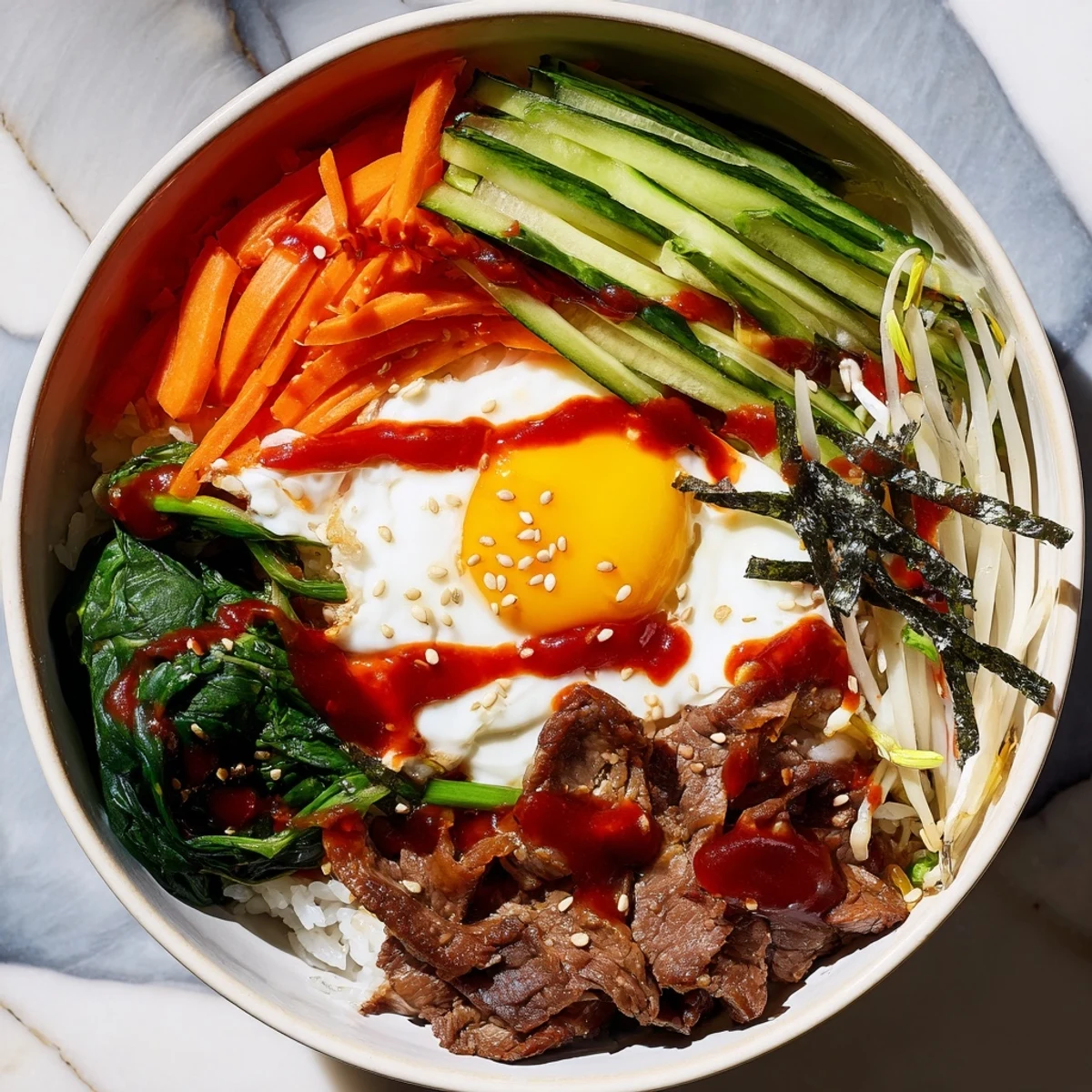
Save This satisfying morning bowl brings together thinly sliced beef marinated in soy and sesame, quick-sautéed spinach, fresh cucumber and carrot, crunchy bean sprouts, and a perfectly fried egg with a golden runny yolk. Everything rests over a bed of warm short-grain rice, finished with a homemade spicy-sweet gochujang sauce that ties all the flavors together.
The preparation comes together in under an hour, making it perfect for weekend breakfast or meal prep. Simply marinate the beef while you prep the vegetables, cook each component separately, then arrange everything in sections over the rice for that classic bibimbap-style presentation.
Customize the spice level by adjusting the gochujang, swap beef for tofu or mushrooms if preferred, and always serve with extra kimchi for that authentic Korean-inspired touch.
Last winter, I discovered Korean rice bowls at 2 AM after scrolling through cooking videos instead of sleeping. Something about that runny yolk breaking over spicy beef and warm rice made my stomach growl so loud I had to make it immediately. I burned my palm on the skillet handle and ate the whole thing standing up in my kitchen, steam fogging my glasses, completely converted to the breakfast bowl way of life.
My roommate walked in mid-assembly, saw me arranging vegetables like I was running a Michelin-star restaurant, and immediately demanded to know what smelled so incredible. We both ended up eating on the floor because I forgot to clear the table, neither of us caring about anything except breaking those yolks and mixing everything together until the rice turned this gorgeous red from the sauce.
Ingredients
- Beef sirloin or ribeye: Thinly slice this against the grain when its slightly frozen for cleaner cuts that stay tender during quick cooking
- Soy sauce: The salty backbone of the beef marinade, creating that perfect umami balance with the brown sugar
- Sesame oil: A little goes a long way, adding that distinct nutty aroma that makes everything smell authentic
- Brown sugar: Helps the beef caramelize beautifully and balances the savory elements
- Garlic and ginger: The classic Korean flavor duo that makes the marinade taste like something you'd get at a restaurant
- Rice vinegar: Adds brightness to cut through the rich beef and spicy sauce
- Baby spinach: Wilts down to almost nothing but adds that pop of green and fresh flavor
- Carrot and cucumber: Julienned vegetables provide essential crunch contrasting the tender beef and fluffy rice
- Bean sprouts: Blanch them just enough to remove the raw bite while keeping their snappy texture
- Cooked short-grain white rice: Use warm rice, fresh from the rice cooker or reheated, for the best texture
- Eggs: Sunny-side up with set whites and runny yolks is non-negotiable for the full experience
- Gochujang: Korean chili paste brings the heat and sweetness, adjust amount based on your spice tolerance
- Honey or sugar: Sweetens the spicy sauce to create that addictive spicy-sweet balance
- Green onions: Fresh bite and color scattered over everything
- Toasted sesame seeds: Final crunch and nuttiness sprinkled generously on top
- Nori strips: Optional but adds that ocean-brine flavor that ties everything together
Instructions
- Marinate the beef:
- Whisk together soy sauce, sesame oil, brown sugar, garlic, ginger, and rice vinegar until the sugar dissolves, then toss with the sliced beef and let it hang out for at least 15 minutes while you prep everything else.
- Cook the beef:
- Get your skillet ripping hot over medium-high heat, add the beef in a single layer, and let it sear undisturbed for a minute before tossing for 2-3 minutes total until browned and aromatic.
- Prep the vegetables:
- Quickly sauté the spinach until just wilted, blanch the bean sprouts in boiling water for exactly one minute, then julienne that carrot and slice the cucumber into thin ribbons.
- Fry the eggs:
- In a separate nonstick skillet, crack those eggs in and let them cook slowly until the whites are completely set but the yolks still jiggle when you shake the pan.
- Make the sauce:
- Whisk together gochujang, honey, water, sesame oil, and rice vinegar until smooth and drizzle-worthy, adding water if it's too thick.
- Assemble the bowl:
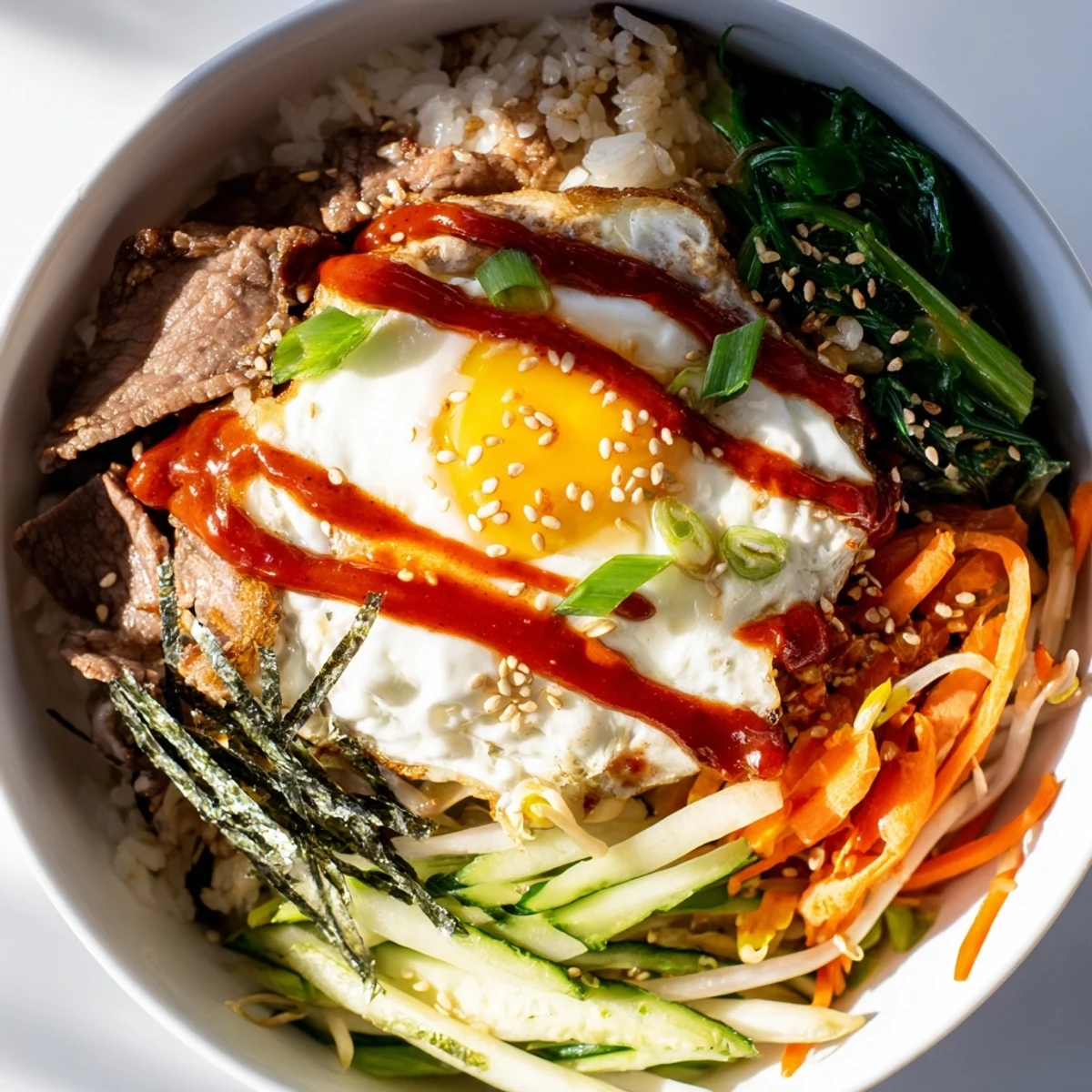
- Pile that warm rice into two bowls, arrange all your components in separate sections like a clock face, crown each bowl with a fried egg, and drizzle with sauce before sprinkling sesame seeds and nori all over everything.
 Save
Save The first time I made this for my sister, she called me at 7 AM the next morning asking how to make it because she was craving it so bad. Now it's become our weekend ritual, something we cook together while catching up, always forgetting a vegetable but never the eggs.
Making It Your Own
Once you master the basic structure, this bowl becomes a canvas for whatever you have in your fridge. I've swapped beef for marinated tofu when my vegetarian friend came over, used kale instead of spinach when that's what I had, and even added pickled radishes for extra tang.
The Rice Foundation
Short-grain rice is essential here because it sticks together slightly, making it easier to scoop up all those toppings with every bite. Rinse your rice until the water runs clear before cooking, and fluff it gently with a rice paddle so each grain stays separate but still clingy.
Sauce Mastery
That gochujang sauce is what ties everything together, so taste it before drizzling and adjust the sweetness or heat level to your liking. Sometimes I add a splash more rice vinegar if the beef marinade was particularly salty, or an extra half teaspoon of gochujang if I'm feeling brave.
- Mix your sauce in a small jar and keep it in the fridge for up to a week
- Double the sauce recipe because you'll want to put it on everything
- Add a teaspoon of Korean perilla oil if you can find it for next-level flavor
 Save
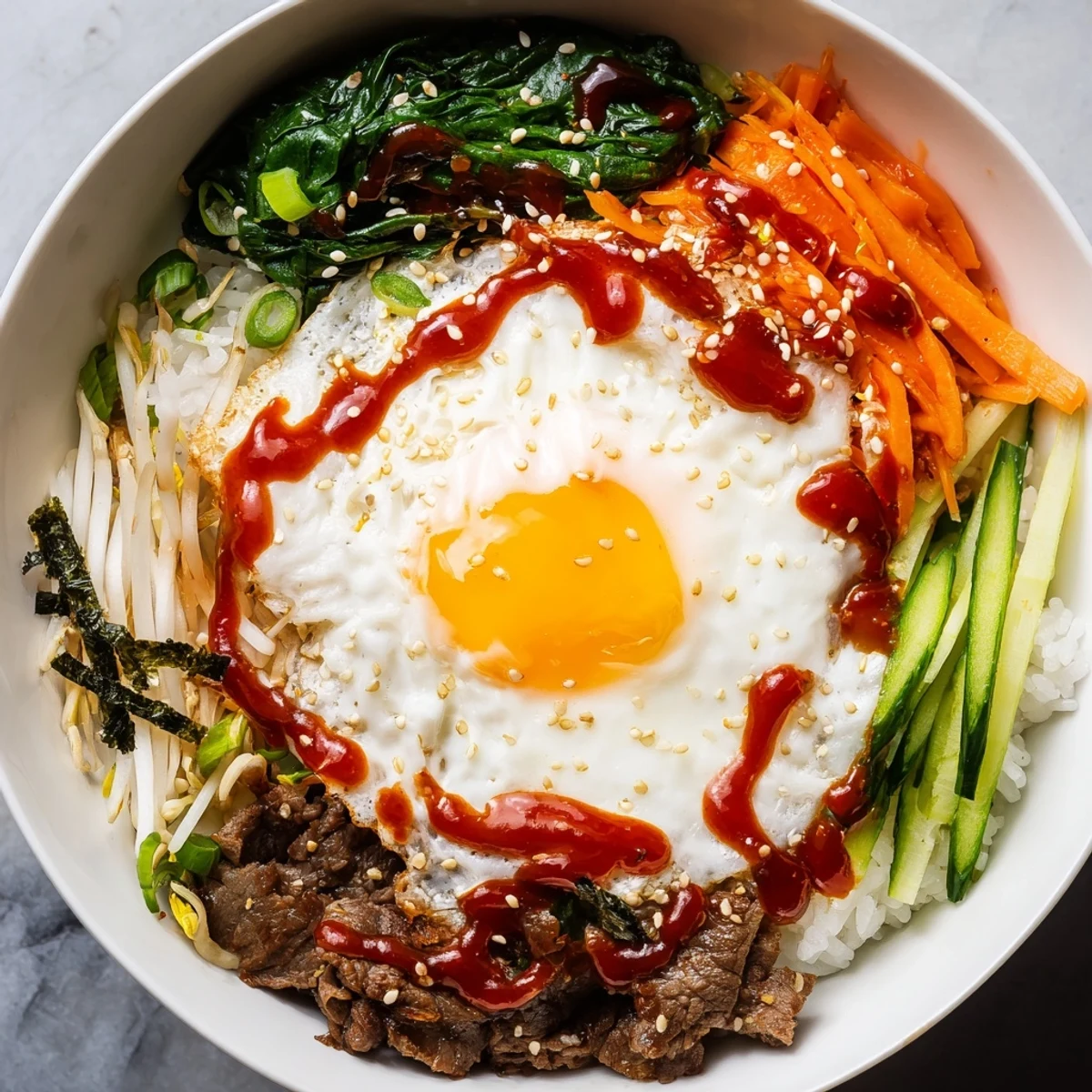
Save There's something deeply satisfying about breaking that yolk and watching it coat everything in golden richness, mixing all the components together until each spoonful has a little bit of everything. That first bite still stops me in my tracks every single time.
Recipe FAQs
- → Can I prepare this bowl ahead of time?
-
Yes, you can marinate the beef and prepare all vegetables up to a day in advance. Store each component separately in the refrigerator and reheat gently before assembling. Fry the eggs fresh for the best texture.
- → What cut of beef works best?
-
Thinly sliced sirloin or ribeye are ideal for quick cooking and tenderness. Flank steak also works well. Slice the beef against the grain and partially freeze it for easier thin slicing.
- → How can I make this vegetarian?
-
Replace the beef with firm tofu cubes or portobello mushrooms. Marinate and cook them the same way as the beef. You can also add more vegetables like zucchini, bell peppers, or sweet potato for extra substance.
- → Is gochujang very spicy?
-
Gochujang has moderate heat with a sweet and savory profile. You can adjust the amount in the sauce to your preference. For milder flavor, start with one tablespoon and taste before adding more.
- → Can I use brown rice instead of white?
-
Absolutely. Brown rice adds nutty flavor and extra fiber, though it requires a longer cooking time. Short-grain brown rice works best for the sticky texture that helps everything stay together in the bowl.
- → What other toppings can I add?
-
Kimchi is the classic addition for tang and probiotics. You can also add pickled daikon radish, roasted seaweed snacks, avocado slices, or a drizzle of sesame oil for extra richness.