
 Save
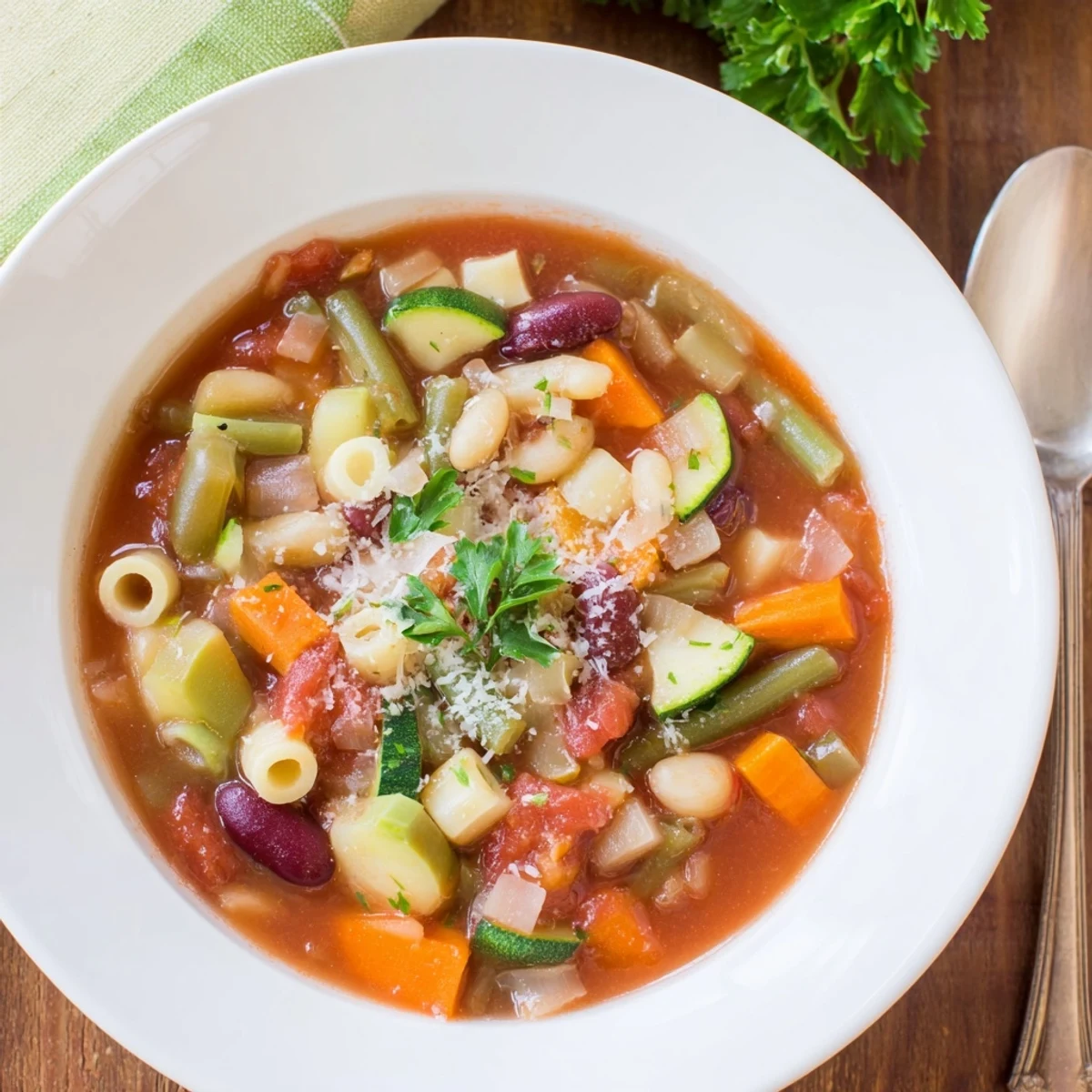
Save This Italian minestrone combines a soffritto of onion, carrots and celery with garlic, zucchini and potato, simmered in a rich tomato-vegetable broth. Cannellini and kidney beans add creamy texture while small pasta cooks into the soup near the end. Season with oregano, basil and a bay leaf, finish with parsley and optional grated Parmesan. Ready in about an hour; flavours deepen after resting overnight.
The rain was hammering against the kitchen window and I had a half empty fridge staring back at me when I decided to throw together whatever vegetables I could find into a pot. That chaotic evening birthed the best minestrone I have ever made, and I have been chasing that flavor ever since. There is something deeply satisfying about a soup that refuses to be precious and welcomes whatever you have on hand.
My neighbor Luca once knocked on my door carrying a bottle of wine just as I was ladling this soup into bowls, and he ended up staying for three bowls and told me it reminded him of his nonna.
Ingredients
- Olive oil: Two tablespoons of good quality olive oil create the flavor foundation, so do not skimp here.
- Onion: One medium onion, diced small, melts into the broth and adds natural sweetness.
- Carrots: Two medium carrots, diced, bring color and a subtle earthy sweetness that balances the tomatoes.
- Celery: Two stalks, diced, provide that classic Italian soffritto base you cannot skip.
- Garlic: Two cloves, minced, but honestly I often use three because garlic is magic.
- Zucchini: One small, diced, adds a tender bite and soaks up the broth beautifully.
- Potato: One small, peeled and diced, gives the soup body and a lovely creamy texture as it cooks.
- Green beans: One cup chopped, for snap and freshness amid the softer vegetables.
- Diced tomatoes: One fourteen ounce can with all its juices creates the rich tomato broth.
- Vegetable broth: Six cups of broth form the backbone, and a good quality one makes all the difference.
- Cannellini beans: One fifteen ounce can, drained and rinsed, for creamy protein.
- Red kidney beans: One fifteen ounce can, drained and rinsed, for color and hearty texture.
- Small pasta: Three quarters of a cup of ditalini or elbow macaroni turns this from a side into a meal.
- Dried oregano and basil: One teaspoon each, dried herbs infuse the broth with warm Italian fragrance.
- Bay leaf: Just one, but remember to fish it out before serving.
- Salt and pepper: To taste, and taste again at the end because broths vary in saltiness.
- Fresh parsley: Two tablespoons chopped, scattered on top for a bright finish.
- Parmesan cheese: Grated over each bowl for a salty, nutty kick that ties everything together.
Instructions
- Build the base:
- Heat the olive oil in a large pot over medium heat and add the onion, carrots, and celery, stirring until they soften and your kitchen smells like an Italian grandmother moved in, about five minutes.
- Add the heartier vegetables:
- Stir in the garlic, zucchini, and potato, cooking for another three minutes until the garlic is fragrant but not browned.
- Bring it all together:
- Add the green beans and diced tomatoes with their juices, then pour in the vegetable broth and both cans of beans along with the oregano, basil, bay leaf, salt, and pepper, stirring until everything is happily mingled.
- Let it simmer:
- Bring the pot to a boil, then reduce the heat and let it bubble gently for fifteen minutes so the flavors have time to get acquainted.
- Cook the pasta:
- Add the small pasta directly into the soup and cook for ten more minutes until the pasta is tender and the vegetables yield easily to a fork.
- Finish and serve:
- Remove and discard the bay leaf, taste for salt and pepper, then ladle into warm bowls topped with fresh parsley and a generous shower of Parmesan.
 Save
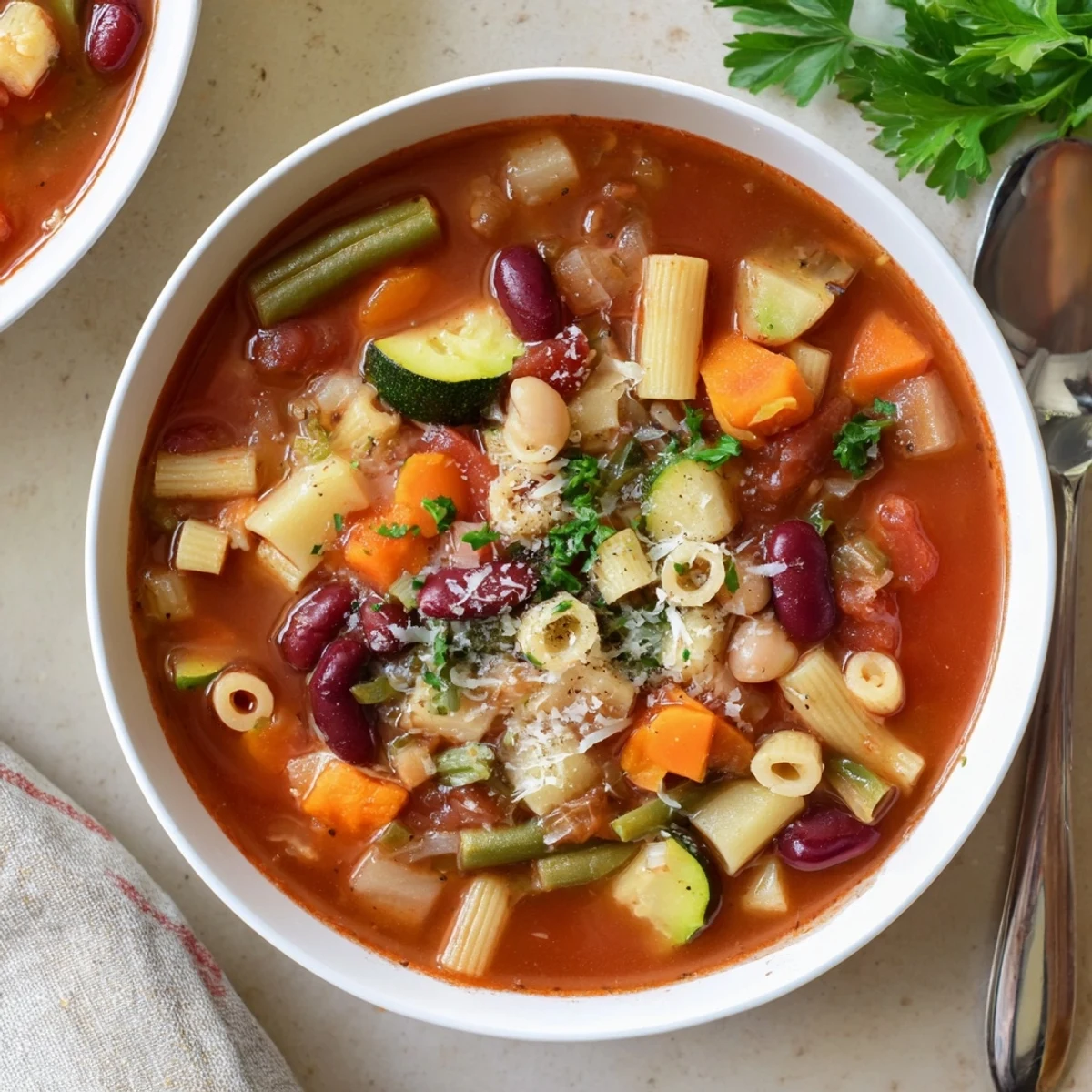
Save I once packed this soup in a thermos for a cold afternoon at the park and a stranger actually asked me what smelled so good.
Making It Your Own
This soup is more of a philosophy than a strict recipe, and I have thrown in everything from leftover kale to a handful of frozen peas depending on the season.
Allergen Swaps
Gluten free pasta works perfectly here, and nutritional yeast can stand in for Parmesan if you are avoiding dairy without losing that savory depth.
Storing and Reheating
This soup keeps beautifully in the refrigerator for up to four days and the flavor deepens overnight as the ingredients continue to marry in the fridge.
- Store in glass containers if possible because tomato broth stains plastic.
- Reheat gently on the stove rather than the microwave for the best texture.
- Add a splash of broth when reheating if the pasta has soaked up too much liquid.
 Save
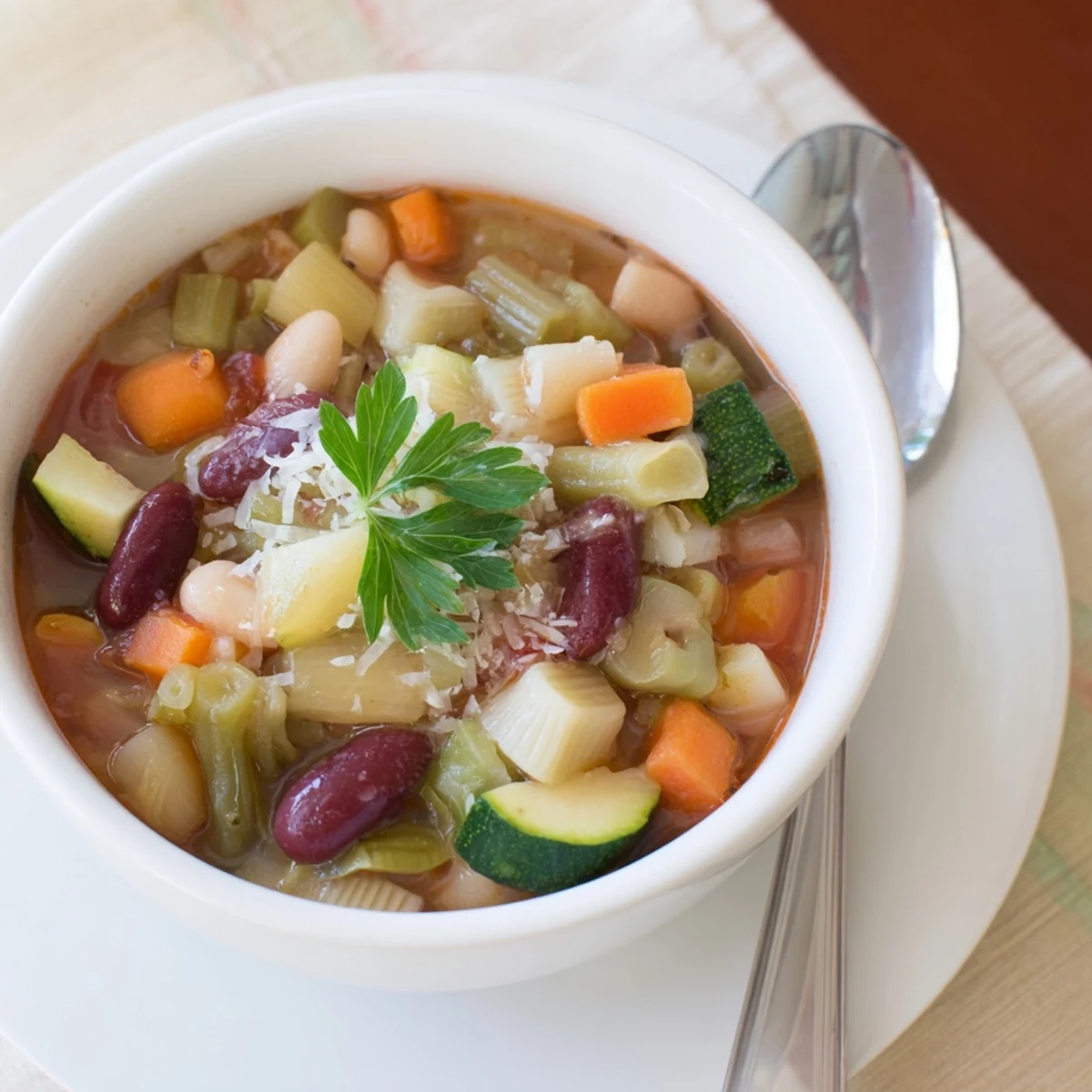
Save Some recipes become part of your rotation and some become part of your life, and this minestrone is the one I reach for when someone I love needs a warm bowl of comfort.
Recipe FAQs
- → Can I swap the beans or pasta?
-
Yes. Use any firm white beans or a single can of mixed beans for variety. Choose small shapes like ditalini, elbow macaroni or small shells so they cook quickly and integrate with the vegetables.
- → How do I prevent the pasta from getting mushy?
-
Add the pasta toward the end of simmering and cook just until al dente. If storing leftovers, keep pasta separate and add when reheating, or use slightly undercooked pasta initially so it finishes in the reheating step.
- → How can I make a vegan version?
-
Simply omit the grated Parmesan or top with a plant-based alternative. Ensure any store-bought broth is vegan and skip dairy-based garnishes for a fully plant-forward bowl.
- → Will this freeze well?
-
Yes. Cool completely, then freeze in portions without fresh herbs or cheese. Thaw and reheat gently; you may want to add a splash of broth and fresh parsley after reheating to refresh the flavours.
- → How can I adjust the thickness?
-
For a thicker texture, mash a cup of the beans or some of the cooked vegetables against the pot before adding pasta. To thin, stir in extra hot vegetable broth until you reach the desired consistency.
- → What seasonal vegetables work well as swaps?
-
Spinach, kale, cabbage, leeks, or diced squash all work nicely. Add tender greens near the end of cooking and heartier vegetables earlier so everything reaches tenderness at the same time.