
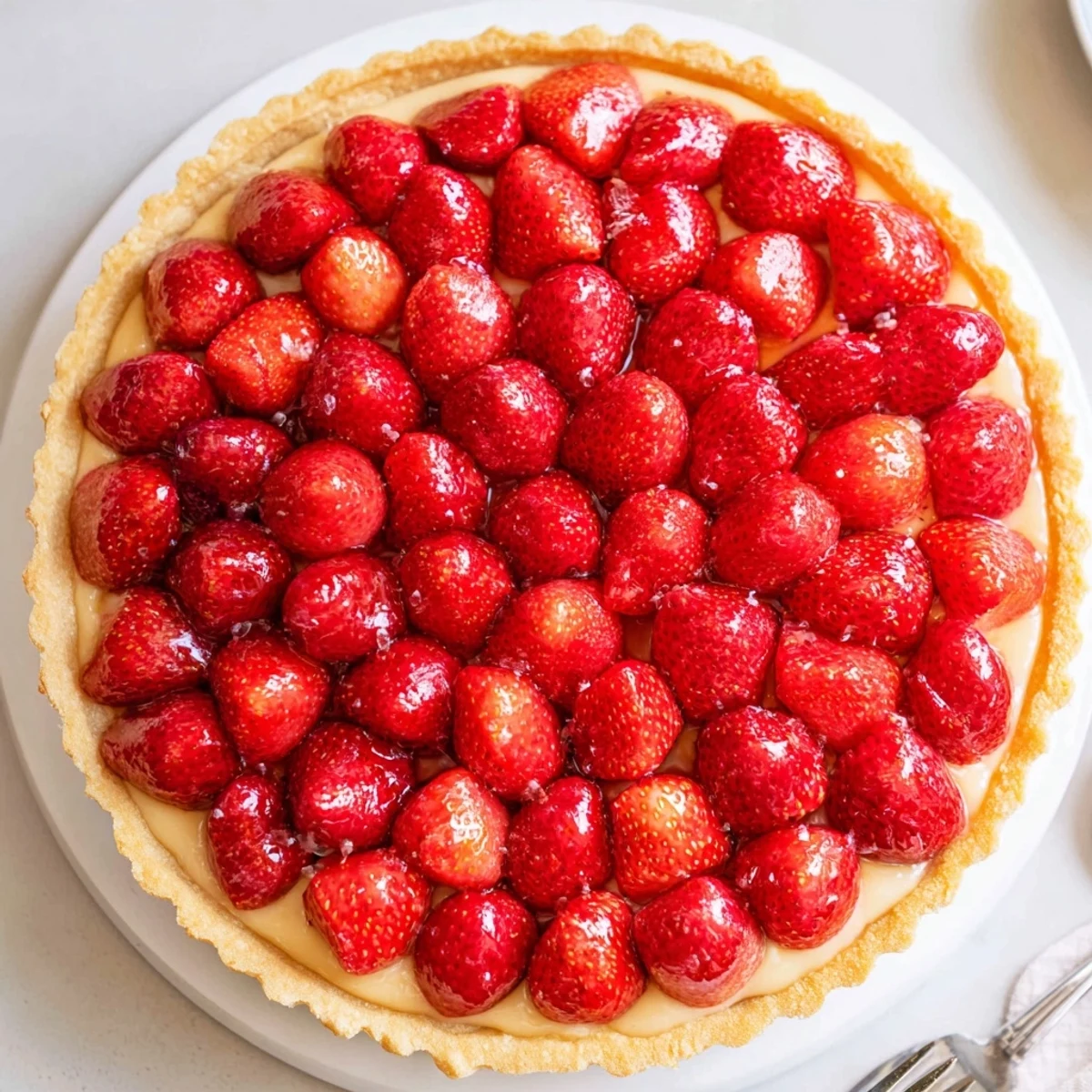
 Save
Save Cette tarte aux fraises associe une pâte sablée croustillante à une crème pâtissière onctueuse, surmontée de fraises fraîches nappées d'un glaçage à l'abricot. Préparez la pâte, cuisez-la à blanc, réalisez la crème en chauffant lait et vanille, puis montez et nappez. Refroidir avant de servir pour des parts nettes et un bel rendu brillant.
As soon as the first strawberries start arriving at the market, their fragrance is impossible to resist. There’s something quietly joyful about standing at the counter on a lazy Sunday, sweet fruit tumbling over the boards, and pie dough just softening from the chill of the fridge. This tarte aux fraises never fails to brighten the kitchen, and its glossy top always reminds me of impromptu celebrations—even when there’s no occasion except sunlight through the window. The ritual of spreading crème pâtissière and arranging berries feels like its own kind of play.
I once made this for a group of friends after a long spring walk, and I was sure the tart would be too warm to slice neatly. To my surprise, we devoured it spooned straight from the dish, laughing at how etiquette surrenders to cravings when fruit is this fresh. Even the crumbs seemed to vanish before I got to sit down.
Ingredients
- Flour (250g): Choosing plain flour keeps the pastry delicately crumbly—sift it for a lighter texture.
- Cold unsalted butter (125g): Use it straight from the fridge and cut into cubes, working quickly to keep the dough tender.
- Icing sugar (80g): This gives the pastry its fine, short texture and a touch of sweetness without grittiness.
- Egg (1): Just enough to bind the pastry, bringing richness—try to use a fresh, room temperature egg when possible.
- Pinch of salt: Don’t skip this; it keeps the tart from tasting flat and balances the sweetness.
- Whole milk (500ml): Makes the crème pâtissière satisfyingly creamy—don’t be tempted by skim milk here.
- Vanilla pod or extract (1 pod or 1 tsp): Splitting and infusing a real pod brings heady aroma, but good extract works well in a pinch.
- Sugar (100g): Adds just the right amount of sweetness to the custard without making it cloying.
- Egg yolks (4): Make the cream velvety and rich—don’t skimp, and save the whites for meringue or omelets.
- Cornstarch (40g): Prevents the custard from turning runny—make sure to whisk thoroughly to avoid lumps.
- Butter (30g): The final addition for an extra luscious finish—add off heat for a smoother cream.
- Fresh strawberries (500g): Choose ripe, fragrant berries with no bruises; slice just before using for the glossiest look.
- Apricot jam (2 tbsp): Heated with water, it’s brushed over the fruit for beautiful shine and gentle sweetness.
- Water (1 tbsp): Loosens the jam so it glides over the berries rather than clumping.
Instructions
- Make the pastry:
- Measure flour, sugar, and salt into a bowl, then quickly rub in cold butter until it’s sandy and the mixture feels cool between your fingers. Add the egg and keep mixing lightly until the dough just comes together—don’t overwork it; a few streaks are fine.
- Chill and roll:
- Shape the dough into a disk, wrap, and chill for 30 minutes. Roll out on a lightly floured surface, fit it into a tart tin, trim, and prick the base with a fork to prevent bubbles.
- Blind bake the crust:
- Line the pastry with parchment, fill with baking weights or dried beans, and bake at 180C for 20 minutes. Remove the weights and paper, and bake for another 10 minutes until just golden and dry to the touch.
- Prepare the custard:
- Warm the milk with split vanilla pod or extract until just steaming. In another bowl, whisk together yolks, sugar, and cornstarch until pale, then whisk in a splash of hot milk before pouring everything back into the pan—keep stirring as it thickens, then take off the heat and beat in the butter until glossy.
- Cool and cover:
- Transfer custard to a bowl and press plastic wrap directly onto the surface so it doesn’t form a skin. Let it cool completely—or set it over ice to hurry things along on impatient days.
- Prep the strawberries:
- Rinse, dry, hull, and slice your berries just before assembly so they keep their shape and flavor. Taste one: if it makes you smile, you’ve chosen well.
- Assemble the tart:
- Spread cooled pastry case with all the custard, then arrange strawberries on top however you fancy—fan or scatter, no need for symmetry unless you want it. Heat jam with water, brush gently over the berries, cover, and chill for at least an hour before slicing.
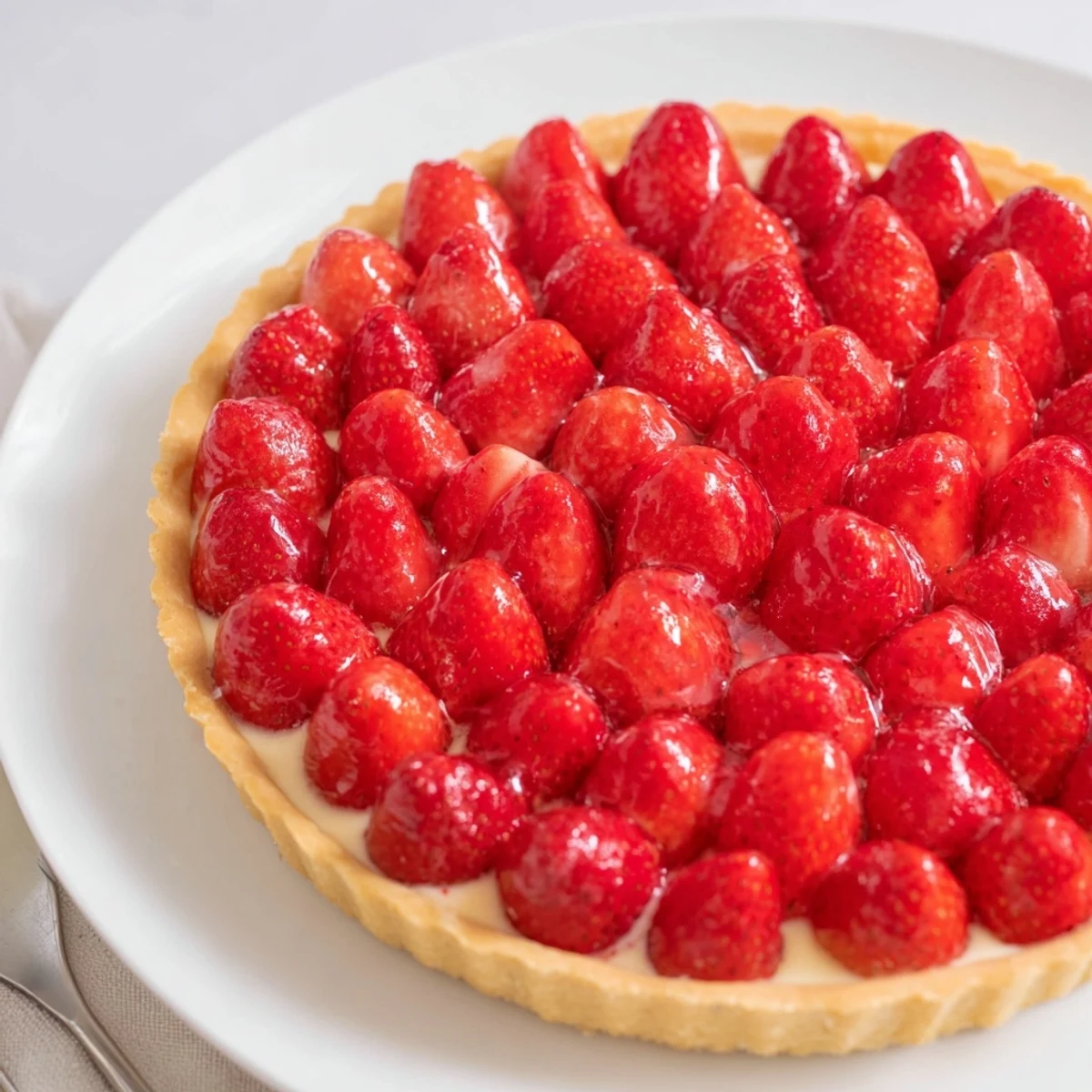 Save
Save The day I laid out this tart for a friend’s birthday picnic, the surprise on everyone’s faces as the first slice revealed the creamy layer beneath the berries was priceless. The combination of crisp crust, vanilla custard, and fresh fruit instantly transformed a patch of grass into a celebration.
Choosing and Preparing Your Strawberries
Pick strawberries at their peak—bright red, fragrant, and just firm. I’ve learned not to toss them in water en masse, but to give each a gentle rinse and dry with a towel, which keeps them from becoming watery or bruised in the tart.
Variations I’ve Tried
You can swap in a bit of lemon zest for brightness in the custard, or even layer a thin swipe of raspberry jam under the cream for depth. Sometimes I use a mix of berries if strawberries are scarce—just keep the quantities the same, and you’ll have a colorful patchwork instead of a single note.
Serving, Storage, and Troubleshooting
The tart holds its shape best after an hour’s rest in the fridge, so plan ahead if you want picture-perfect slices. Crust getting soggy? Brush a thin layer of melted white chocolate between pastry and cream to seal it (a pastry chef trick).
- Slice the tart with a knife dipped in hot water for clean edges.
- If you see custard lumps, just pass it through a sieve before chilling.
- Remember to serve thoroughly chilled for the best taste and texture.
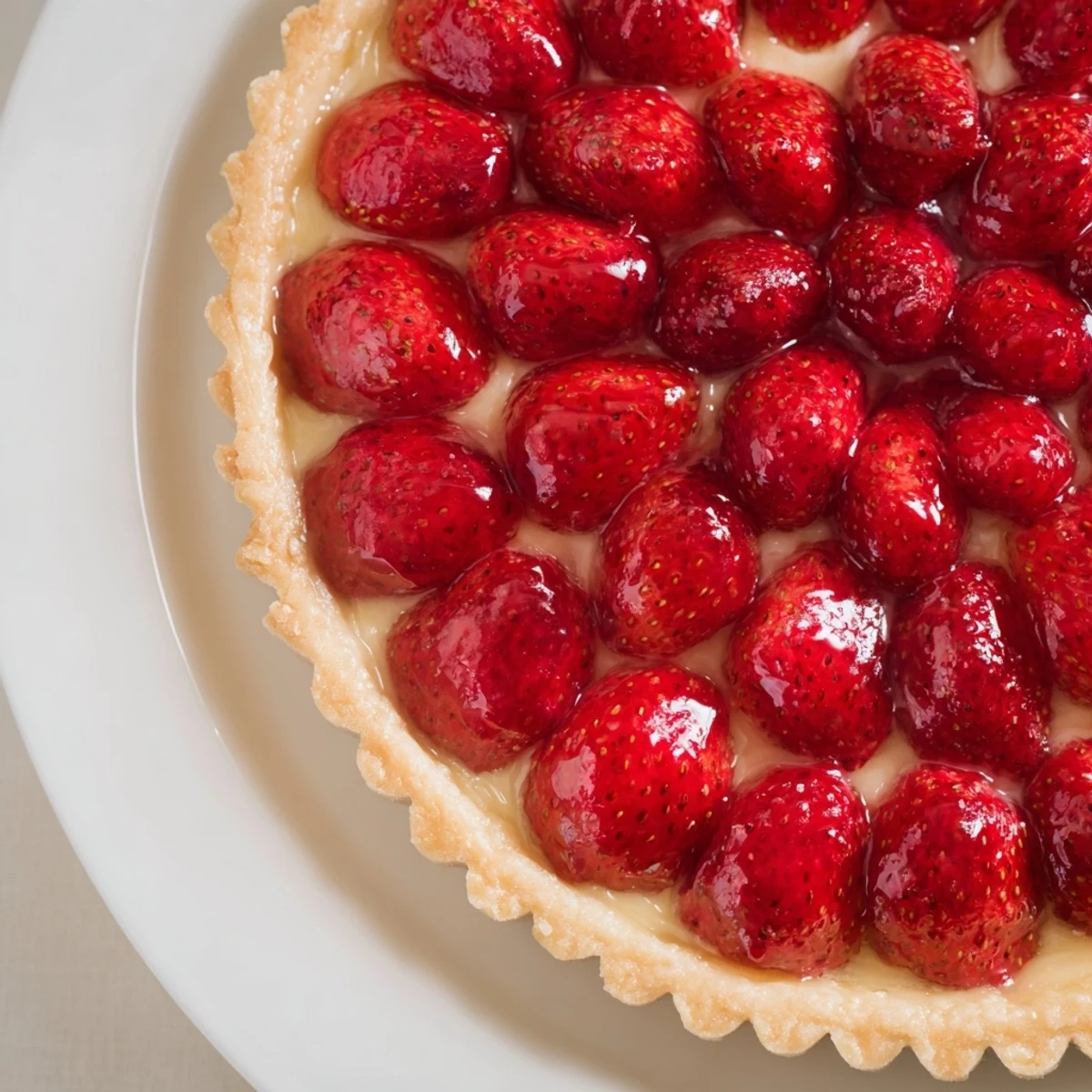 Save
Save Every time I make this, it draws everyone into the kitchen before I’m even finished. Don’t be surprised if your tart disappears before it ever makes it to the table.
Recipe FAQs
- → Comment obtenir une pâte sablée bien croustillante ?
-
Travaillez le beurre froid du bout des doigts pour sabler la farine, évitez de trop pétrir la pâte, laissez-la reposer 30 minutes au frais puis cuisez-la à blanc avec poids pour garantir une texture croustillante.
- → Comment éviter les grumeaux dans la crème pâtissière ?
-
Fouettez d'abord les jaunes avec le sucre et la maïzena, incorporez un peu de lait chaud pour tempérer, puis reversez et cuisez à feu moyen en remuant sans cesse jusqu'à épaississement. Filmer au contact aide à éviter la peau.
- → Peut-on remplacer le lait entier ?
-
Le lait demi-écrémé convient pour alléger légèrement la garniture, mais le lait entier apporte plus d'onctuosité. Les laits végétaux modifient la tenue et le goût, donc adapter la quantité de beurre si nécessaire.
- → Comment obtenir un nappage brillant sur les fraises ?
-
Chauffez la confiture d'abricot avec un peu d'eau, tamisez si besoin, puis badigeonnez délicatement les fraises encore froides avec un pinceau. Appliquez une fine couche pour un bel effet sans alourdir.
- → Combien de temps se conserve la tarte ?
-
Conserver au réfrigérateur jusqu'à 48 heures maximum. Pour éviter que la pâte devienne détrempée, garnissez et nappez la tarte peu de temps avant le service quand c'est possible.
- → Quelles variantes pour parfumer la crème pâtissière ?
-
Ajoutez du zeste de citron pour une touche acidulée, un peu d'extrait d'amande pour plus de caractère, ou incorporez du mascarpone pour une texture encore plus riche.